by Sree Mekala
“Did you know that HOSA isn’t getting funded this year? We have to pay for everything ourselves.” When my fellow club officer said this, I was not surprised that our school made the decision to refuse to help pay for the State Leadership Conference this year. They always cared more about sports; nevertheless, I was still disappointed, knowing that our club division for the Health Occupations Students of America would have to find alternatives for fundraising even though it was the only educational outlet that Nation Ford High School had.
In reality, most South Carolina schools do not encourage academic growth because unlike athletics, it doesn’t bring any financial benefit. Statistics from the South Carolina Revenue and Fiscal Affairs Office show that school expenditures for instructional support, which include extracurriculars, are only 12.1 percent. This statistic includes athletics as well. Considering the amount of athletics in schools and the cost of equipment to maintain them, it can be said that spending is heavy in the field. Although districts secure most funding through sports to maintain campus infrastructure, the disregard for education within public institutions leaves our state at 43rd in national rankings, according to the U.S. News & World Report. When my team and I went to internationals for HOSA, the winners never came from South Carolina. Instead, competitors from New York, New Jersey, California, and even North Carolina took the stage, accepting the honor and inspiring future kids to get involved. It raised the question: What are we lacking in our education system?
Clearly, the answer is that our state does not invest equally when it comes to academics. While South Carolina has a portion of schools that actively participate in student learning, they do not extend those resources to develop others toward that level. This assumption is based on my school, because it is ranked tenth in the state, according to the U.S. News & World Report, but it cannot afford to fund clubs that promote student leadership. In contrast, states like North Carolina, which is ranked twelfth in the country, motivate teens to get involved in activities through myriad institutions, creating a stronger scholastic environment.
Improving South Carolina means initiating a shift in priorities toward academics in every single school, from financing student organizations to planning the first steps for college. Reflecting on my experience in Nation Ford, I know it is time for reform so that students can obtain experiences equal to their peers across the state.
From the moment I stepped into high school, all I could think about was my future. I loved when adults would ask me, “What do you plan to major in?” and “What college do you want to go to?” It was the opposite for most of my peers, however; they always answered with “I don’t know” or “I’m not there yet.” I was fortunate because I had an older sister who went through the planning and struggles, laying out a path for me to easily follow. But what about those who have no older siblings? Guidance counselors are no help until you have an actual question, but it is hard to ask when you don’t know where to start. For this issue, an effective solution would be providing mandatory workshops to get students involved in learning about the various steps of college applications, majors, and activities.
This idea is taken from the Junior Scholar field trips I took for students who met specific criteria on the PSAT. We visited different colleges to learn more about their programs. During these visits, I connected with numerous people and participated in workshops that gave me insight on popular majors that colleges offer, helping me become more confident in my interests and college plans. If all young people got the chance to engage in similar programs, they would have a better idea of what to ask counselors and could plan accordingly by taking the necessary classes to achieve their career goals. Furthermore, it can offer a foundation to those who are unsure of their major by introducing them to resources that help solidify their interests. After that, there is no need for an older sibling to pave the path; you can create your own path as long as you have the desire to succeed in life.
Moreover, providing academic pathways within schools can open doors for those who struggle with extracurriculars, like me. Every day, I’m worried about college applications and finding aspects of my life that define me so I can shine above the rest. But it is hard to find them when everyone at your school is doing the same. I fear that I am behind everyone else, just barely catching up with my volunteer hours and the few clubs that highlight my best talents. Most people at my school feel the same because there are limited activities that reflect their passions and actually make an impact on the country. At my school, HOSA is the major club for healthcare students and the only one that does events outside of the school, even leading to the national level. Still, it only benefits those who want to go into the medical field.
However, some public schools provide similar outlets for other disciplines, such as statewide robotics competitions. Looking at this difference, South Carolina should encourage schools to provide these programs for students by incentivizing these programs or raising funds to promote such initiatives. This will benefit the school by increasing its ranking as students get more involved in extracurricular opportunities. This will also ease students’ fears of falling behind other students.
By making these reforms, South Carolina can strengthen schools statewide to help students become more involved in their education and inspire a change in their community with the resources available to them. One day, students from our state won’t simply compete on the national stage – they’ll win.
Works Cited
Education Funding Dashboard | South Carolina Revenue and Fiscal Affairs Office. https://rfa.sc.gov/education-funding-dashboard
Ziegler, Brett. “These U.S. States Have the Best Education Systems.” Usnews.com, 2019, www.usnews.com/news/best-states/rankings/education
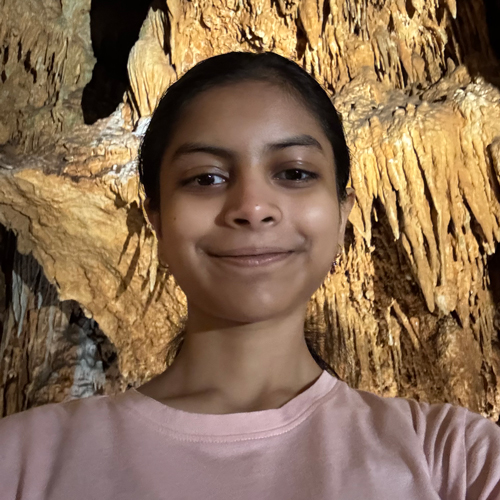
About Sree Mekala
Sree Mekala is a junior at Nation Ford High School in Fort Mill, where Richard Solt is her English teacher. The daughter of Venkata and Vidya Mekala, Sree enjoys baking, drawing portraits, and making handmade gifts. She plans to major in biology and possibly AI in college and is considering careers in pharmaceuticals and medicine.