May 20, 2026 | Erin Bluvas, bluvase@sc.edu
South Carolina may be part of the stroke belt, but it’s poised to pioneer a recovery belt – thanks to the efforts of experts like Julius Fridriksson. For the past 25 years, the professor of communication sciences and disorders – who also happens to be the USC Vice President for Research – has been advancing stroke recovery in the Midlands and beyond.
At the university level, his collaborations have resulted in the state’s first Brain Health Network. As a scientist, his work to improve communication among individuals with aphasia (i.e., a language disorder resulting from brain damage – usually stroke or head injury – that impacts speech, reading and writing) have expanded to the state and national levels. In addition to its widespread local impact that began when he first launched it as a junior faculty member, Fridriksson’s Aphasia Lab recently secured a proclamation from Governor Henry McMaster to declare June as Aphasia Awareness Month. They’ve also been busy at the national level with one of their staff members and two of their participants guiding the launch of a National Aphasia Ambassador Program.
“The Aphasia Lab was established in 2001 with me as its only lab member, and I’m very proud to say that today we have 75 faculty, staff, and students contributing to its mission to advance aphasia treatment and awareness,” says Fridriksson. “And our community of participants has grown to more than 250 individuals with aphasia, who have participated in our programs, dedicated their time and energy to making them even better, and serving as ambassadors – whether formally or informally – to increase awareness of aphasia and engagement in our services.”
Leading from within
Stroke survivors who receive treatment through the Aphasia Lab will be the first to tell you: their programs are life changing. James Jett was only 46 when he experienced a stroke while leading an IT team supporting the 2016 Summer Olympics in Rio. When he woke up one morning, he found he was unable to speak.




Later, when talking to his wife on the phone or leading team meetings, Jett discovered his brain had begun switching pronouns: he became she and vice versa. His speech-language pathologist (who later joined the lab as a clinician) helped him understand his condition. She referred Jett to the Aphasia Lab in 2019, and he’s been increasing his involvement ever since.
When Heather Centella’s aphasia began in 2022, the then 39-year-old was working at home at her new job as the office manager for a law practice. Suddenly her right hand stopped working and her face felt numb. Centella immediately knew she had had a stroke. By 2023, Centella had discovered the Aphasia Lab and also immersed herself in its broad array of treatment and community engagement activities.
Both Jett and Centella have participated in research projects led by the lab’s Center for the Study of Aphasia Recovery (C-STAR), which provides clinical assessment and evaluates novel approaches for the treatment of aphasia (e.g., brain stimulation therapy) and recently enrolled 100 patients in a new study. However, much of the lab’s impact happens outside the clinical space.
Weekly recovery groups (both in-person and virtual), their drama club (Play on Words), a reading group, and monthly meet ups (Lunch Bunch) at local restaurants (which also helps educate hospitality workers about aphasia), and the Aphasia Prom are just a few of the community engagement activities where you’ll find lab members like Jett and Centella.
After becoming ambassadors for the lab, they have both taken on more forward-facing roles – serving on the editorial board for the lab’s newsletter, participating in education videos, attending advocacy and other public events, and helping USC nursing students learning through their patient simulation program.
“The dedicated involvement of individuals like James and Heather is what inspired
us to create the Aphasia Lab Ambassadors’ program,” says Sara Sayers, associate clinical director for the lab. “Over the years, many of our participants
have felt motivated to help others facing the same challenges they’ve faced so we
formed a program where new participants have a safe space to exchange stories. It
also serves as a pathway for our ambassadors to help educate the community as well
as clinicians and providers in other professions and industries about aphasia and
how to best interact with those who have it.”
Increasing the impact
When the National Aphasia Association (NAA) saw the success of the Aphasia Lab Ambassadors
Program, they asked the USC team for guidance in establishing their own. The NAA Ambassador
Program launched in February of 2025 with Jett, Centella, and a few other Aphasia
Lab Ambassadors serving on its inaugural Coordinating Council. Sayers stepped up to
help co-advise the peer-led program.
Fact About Aphasia
-
Nearly 800,000
People experience a stroke each year (one every 40 seconds)
-
38%
of stroke survivors
experience aphasia -
25%
of stroke surivors still have aphasia 3 months later
-
Over 2 Million
People living in the US have aphasia
-
More than 1/3
Of strokes occur among individuals under 65
“The Council designed the program and its structure, including committees and onboarding, in order to best support others who want to begin their advocacy journey,” Sayers says. “Many participants are passionate about raising awareness and creating stronger support systems for people living with aphasia. Their leadership and dedication has now helped lead to a network of more than 200 ambassadors globally.”
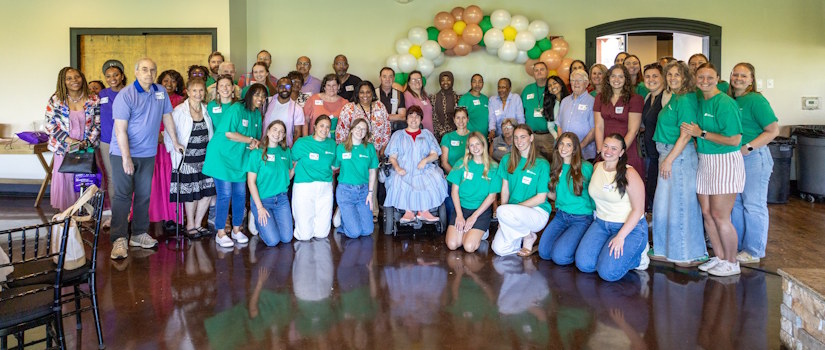
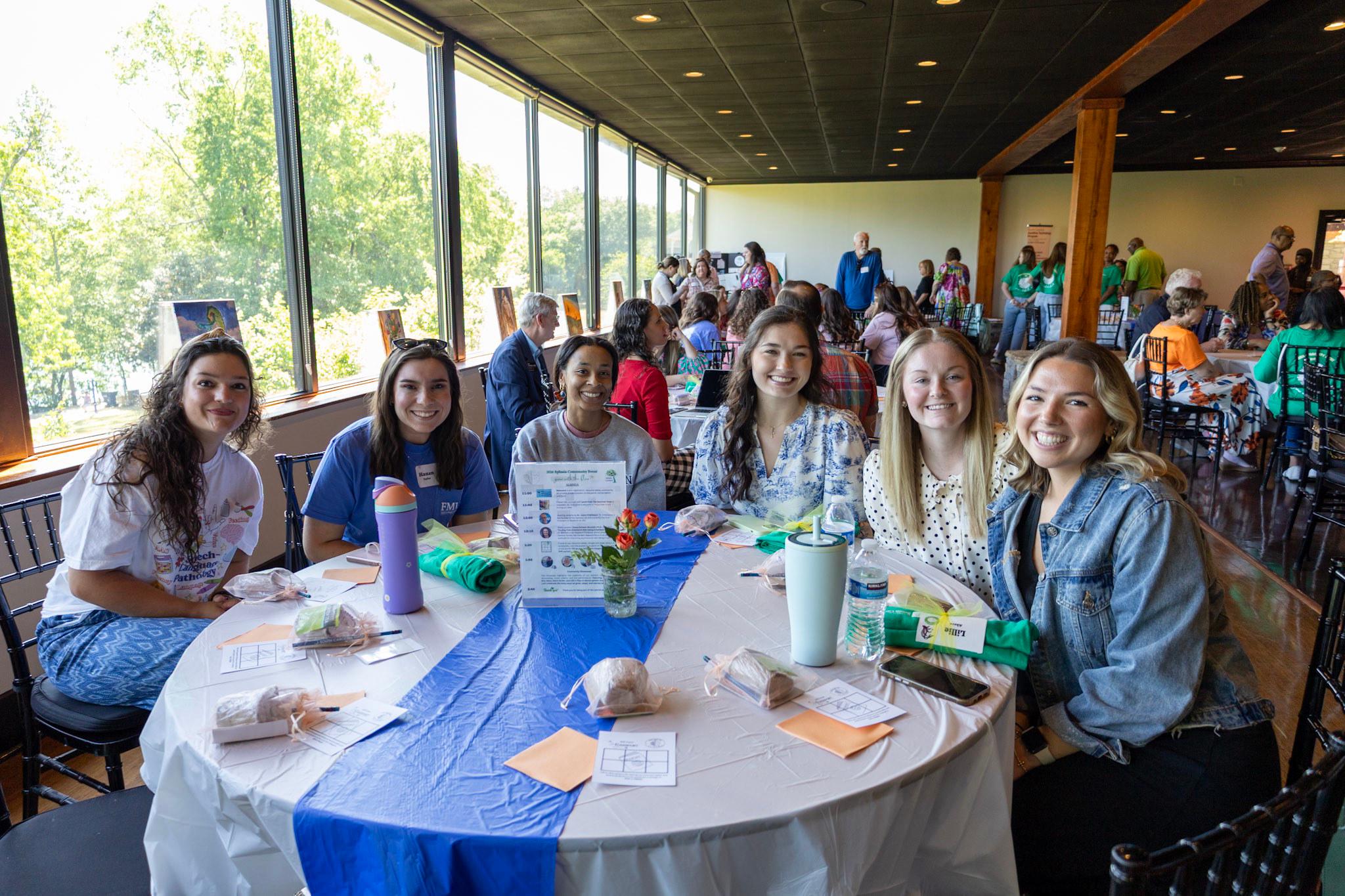
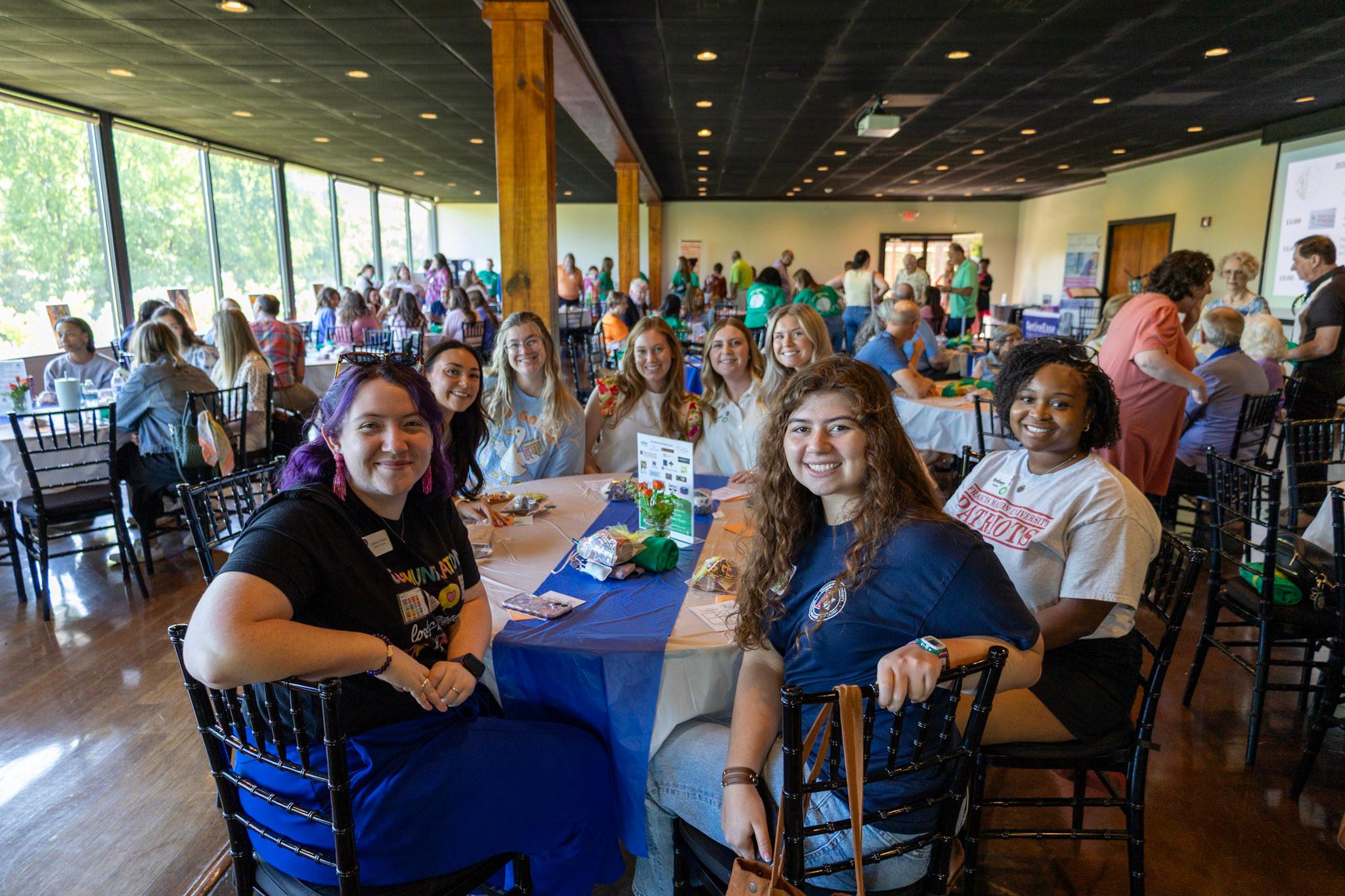
With aphasia ambassadors working together at a national level, the NAA has begun to develop larger, coordinated initiatives to increase awareness. Each state recently identified its own representatives (Jett, Centella and Sayers were natural candidates for SC) to help lead NAA’s United for Aphasia Awareness Campaign. As part of this endeavor, the team petitioned Governor McMaster to declare May as Aphasia Awareness Month, and he readily agreed. Members of the Aphasia Lab – both participants and staff – celebrated the milestone through online posts and in person at the lab’s annual Aphasia Community Event (see photo gallery).
“What we’ve learned over the years in terms of serving individuals with aphasia is that our research studies and therapy are absolutely critical to advancing treatment and recovery, but in addition to therapy, people need to be reintegrated into the community,” Sayers says. “Everyone with aphasia wants to live fully – have friends, find employment, and raise their families – and we’re all working together to help them regain their ability to communicate so they can live their best lives.”
Find Out More
Want to learn more or get involved? Here are some links you'll like:
Aphasia Awareness Video Series Overview Video
USC Aphasia Lab Ambassadors Program
National Aphasia Association Ambassadors Program
Lunch Bunch Community Outreach Program
The Disease Detective Looks at Aphasia is an aphasia documentary featuring many of the Aphasia Lab staff members and community members.
Hide and Speak Up for Aphasia is a program where you take a walk, discover a rock, turn it into art, add a QR code for others to learn more, and hide it in the community.
The C-STAR Series is a biweekly seminar featuring aphasia experts. Some events are a great fit for individuals with aphasia and their families.