Skip to Content

University Libraries

Exhibits

University Libraries often has a number of exhibits that feature collections materials in interesting and narrative ways. Check out our current featured exhibits.

Current Physical Exhibits

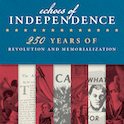
Echoes of Independence: 250 Years of Revolution and Memorialization

How does a nation remember its founding? Beyond retelling the events of 1776, Echoes of Independence examines how successive generations have shaped the Revolutionary narrative to reflect their own values, anxieties, and aspirations. 

In the decades following independence, veterans published personal narratives that emphasized individual sacrifice and hardship, while historians such as South Carolina’s own David Ramsay began the work of establishing a foundational Federalist narrative. By 1876, the nation's Centennial celebration transformed remembrance into spectacle. Newspapers such as Harper’s and Frank Leslie’s lavishly illustrated the Philadelphia Exposition's technological marvels, while guidebooks turned historical pilgrimage to the cradle of independence into tourism. A century later, the 1976 Bicentennial produced its own complex responses, occurring in the wake of the Civil Rights and Women’s Movements as well as the crisis in Vietnam and the Watergate scandal.

The rare books, manuscripts, pamphlets, ephemera, and commemorative materials gathered here from across the University Libraries’ Special Collections demonstrate that the meaning of 1776 is never fixed. It is continually reinvented through publishing, performance, protest, and popular culture in an ongoing dialogue between past and present that reveals as much about who we are as who we were.  
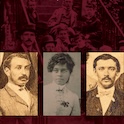
Open to All: The Reconstruction Era at the University of South Carolina, 1868-1877

South Caroliniana Library 

This exhibit illuminates a brief but unique period in American history, in which USC was the only fully integrated college or university in the post-Civil War South. A new state constitution in 1868 opened education to all citizens regardless of race or color and began the first integration of the University of South Carolina. The exhibit features the people of the university - trustees, faculty, and students, some of whom had been born free, and some who had been born into slavery.

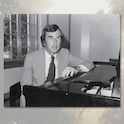
Opera Americana: The Legacy of Carlisle Floyd

South Caroliniana Library

This year marks a century since the birth of the father of American opera, Carlisle Floyd. Born in the small town of Latta, South Carolina, his childhood planted the seeds of his long and storied career as the themes of his iconic works continue to resonate decades after their premiere. His major works — most notably Susannah (1955) and Of Mice and Men (1977) — set the standard for operatic compositions in the United States. These and other operas explore timeless subjects of class, gender, mob violence, and rural isolation.

In Floyd’s later years, he enjoyed the honors his peerless body of work deserved. In 2001, he was inducted into the American Academy of Arts and Letters. In 2004, the National Endowment for the Arts and President George W. Bush awarded him the National Medal of Arts. He also received a Lifetime Achievement Award from the National Endowment for the Arts in 2008. Throughout his career, he received honorary doctorates from Dickinson College, Florida State University, and the University of South Carolina. South Caroliniana Library is honored to preserve and make available his personal and professional papers.


Upcoming Physical Exhibits

old books on shelf

Coming in January, 2027: “Last Folio: The Books” and “Sacred Texts and Traveling Books Across Cultures”

These two interconnected exhibits will run concurrently in Hollings Library. “Last Folio: The Books” features photographs by internationally acclaimed visual artist Yuri Dojc of books left behind by Jewish communities in Slovakia during the Holocaust. In these photos, torn pages, broken bindings and fading Hebrew letters become witnesses to both destruction and endurance—physical remnants of a culture nearly erased from the places where it had once flourished. The exhibit creates a concentrated exploration of books as vessels of memory, identity, knowledge and survival.

Drawing on the Irvin Department of Rare Books and Special Collections’ holdings in religious texts, “Sacred Texts and Traveling Books Across Cultures” explores centuries of religious communities built through migration and exile, trade and conquest, translation and conversation. Ranging from ancient cuneiform recording of prayers to Ishtar, the Mesopotamian fertility goddess, Egyptian hieroglyphs, and papyri scrolls, through early Torah fragments, codex Bibles, and illuminated Qurans, and Buddhist Sutras, to printed documents and commentaries, the items on display illustrate how book production and dissemination and religious faith have mutually influence each other.


Recent Physical Exhibits

Elmore Leonard smoking a cigarette looking at viewer.

The bad guys are the fun guys’: Celebrating 100 years of Elmore Leonard - August 18 - January 2

Elmore Leonard spent more than six decades writing – from Westerns to gritty crime novels to screenplays for popular movies. When asked in an interview how he developed his characters and why he wrote crime fiction, Leonard said, “The bad guys are the fun guys.”Leonard’s archive has been housed at University of South Carolina Libraries since 2014. This exhibit celebrates the 100th anniversary of Leonard’s birth and contextualizes his writings in 20th century popular culture, a culture he had a strong hand in helping to develop and influence. Items on display include correspondence, typescripts and pulp appearances surrounding and featuring Leonard’s large body of work as well as materials from Leonard’s extensive research files. Drafts of various scripts, film treatments and proposals are on display alongside Leonard’s novels. In addition to items from the archive, the exhibition contains materials from the George V. Higgins Archive and the Dashiel Hammet Family Papers, as well as some recent acquisitions and donations.

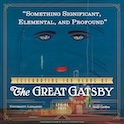
Promotional for the Gatsby exhibit

“Something significant, elemental, and profound”: Celebrating 100 Years of The Great Gatsby - January 24 to July 15 2025

Regarded by many as the “Great American Novel,” F. Scott Fitzgerald’s The Great Gatsby was first published on April 10, 2025. In celebration of the novel’s 100th anniversary, this exhibit features items from the Matthew J. & Arlyn Bruccoli Collection of F. Scott Fitzgerald, which constitutes the most comprehensive research collection for the study and teaching of Fitzgerald, those associated with him, and his times. The exhibit features notable items including the contract, galley proofs and first edition of The Great Gatsby, Fitzgerald’s manuscript ledger book, letters written while he was drafting the novel, inscribed and annotated copies, and material from Fitzgerald’s friends and contemporaries, such as Ernest Hemingway, Max Perkins, T. S. Eliot, Gertrude Stein, and others.  Public viewing hours for the exhibit are Monday through Friday from 9am to 5pm.

Women in Science Fiction: From Frankenstein to Dungeons and Dragons

From the 1600s to the present day, women have long made notable contributions to science fiction. Our Women’s History Month exhibit, located at the front of Thomas Cooper Library, explores the work of acclaimed writers like Mary Shelley, Octavia Butler and Margaret Atwood as well as women writers of pulp fiction and Dungeons and Dragon novels.

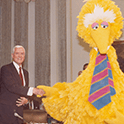
From Geometry to Grover: South Carolina Public Television

From Geometry to Grover: South Carolina Public Television opens August 18 in the South Carolina Political Collections gallery at Hollings Library. The exhibit looks at the history of public television in South Carolina, starting with geometry and French classes presented live from Dreher High School in 1958, all the way to today.


Featured Digital Exhibits 


Challenge the conventional. Create the exceptional. No Limits.

©